



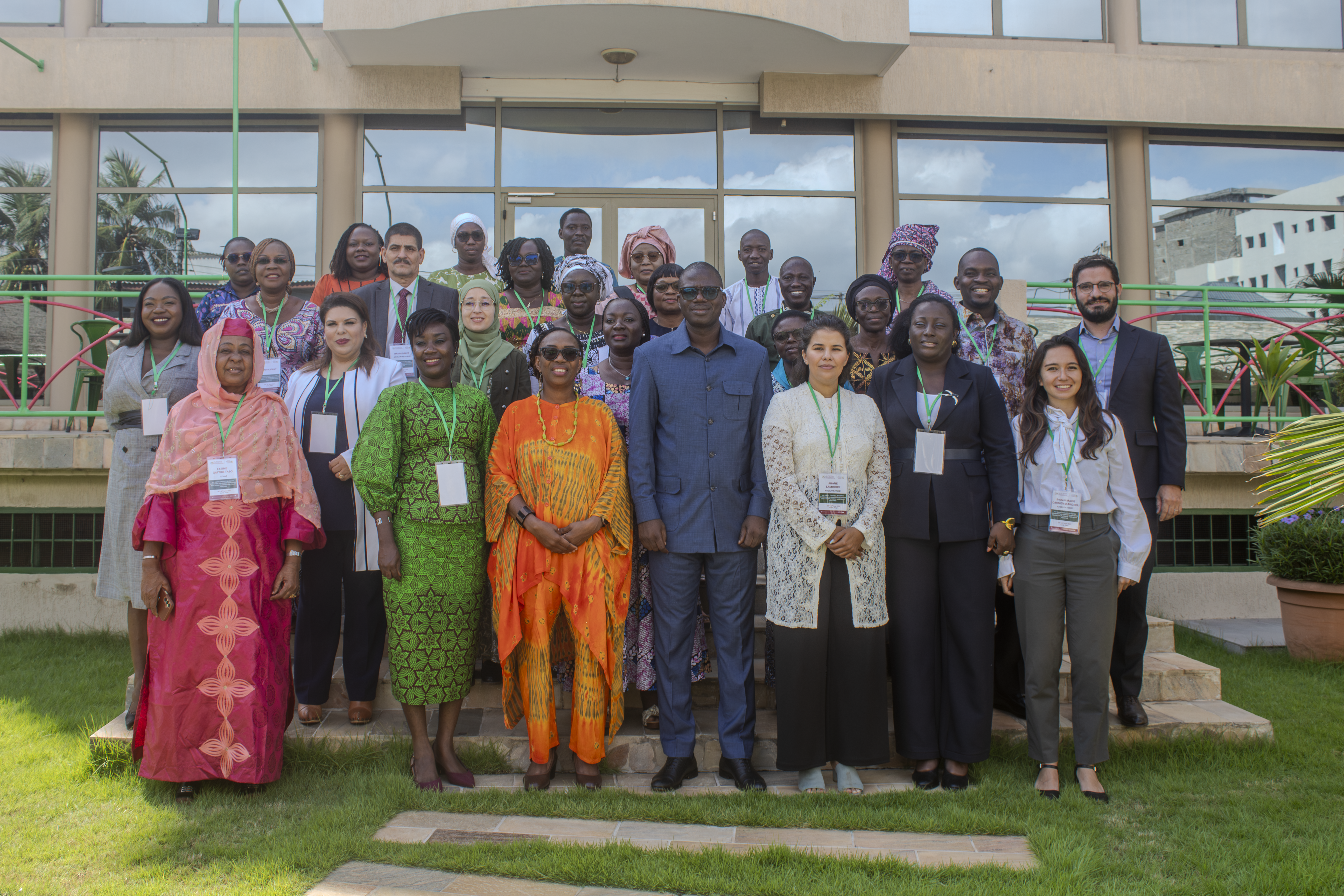
The African Union's International Centre for Girls' and Women's Education in Africa (AU CIEFFA) hosted the second edition of its Gender-Responsive Education Sector Planning (GRESP) training for its Focal Points in gender and education in Lomé from November 4 to 7, 2025.
This strategic four-day workshop brings together 22 experts from the education and gender ministries of 12 African Union member states. The goal is to enhance their understanding of key gender concepts and their relevance to educational planning. Upon completion of the training, participants will have the necessary skills to assess their education policies and contribute to the development of policies that promote inclusive and fair education systems, aligned with national and regional priorities.
In her opening remarks, Mrs. Simone Yankey-Ouattara, Coordinator of AU CIEFFA, emphasised the importance of this event: "This workshop marks a significant step in our collective efforts to advance gender equality in Africa. Gender equality in education is a crucial factor for the sustainable development of our continent." She further asserted that, "This training addresses the underlying causes of gender inequalities and offers a progressive model for countries facing similar challenges to adopt."
Following her, Dr Piyabalo Nabede, Chief of Staff at the Ministry of National Education of Togo, officially opened the workshop on behalf of the host country. He reaffirmed the Togolese Republic's commitment to fully supporting the #AfricaEducatesHer Campaign, highlighting the initiative's importance: "Our country is honoured to host this strategic meeting, under the auspices of the African Union [...]. It is part of an ambitious effort to build an Africa where every child, regardless of gender, has fair access to an inclusive, quality, and empowering education."
Supported by Norwegian funding and the technical expertise of the UNESCO International Institute for Educational Planning (IIEP UNESCO), this initiative, combined with the commitment of the participating member states, aims to firmly establish gender-responsive planning at the core of African education policies, to build more inclusive and resilient systems.