





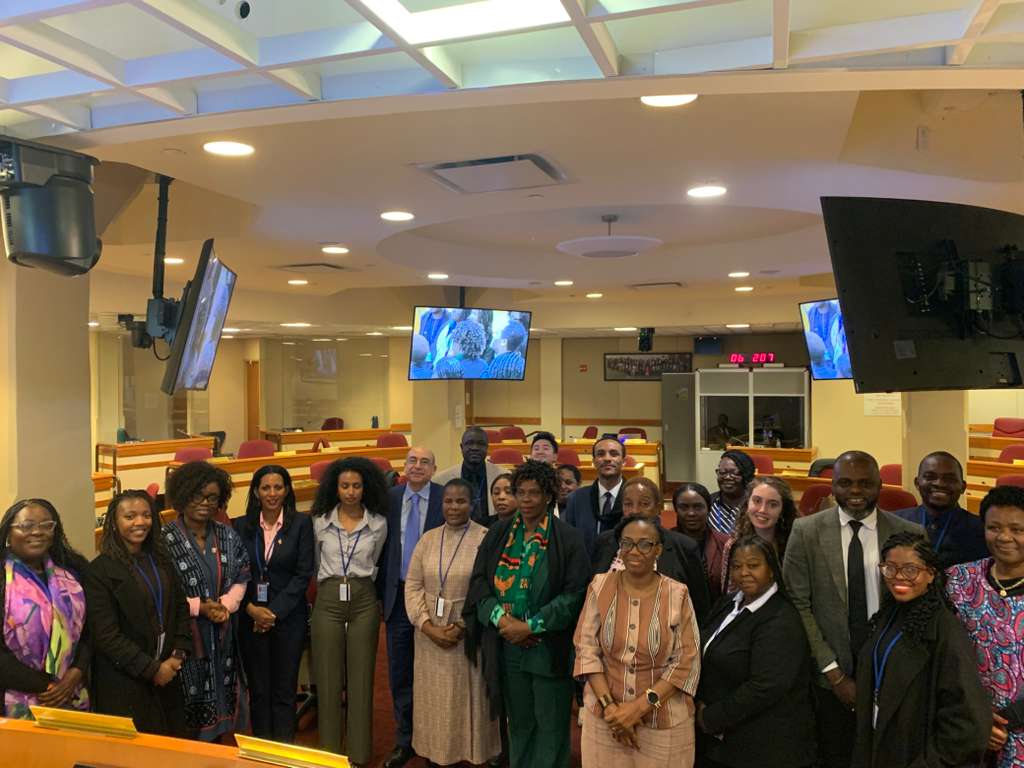

The African Union International Centre for Girls’ and Women’s Education in Africa (AU‑CIEFFA), in collaboration with the Forum for African Women Educationalists (FAWE), convened a high‑level side event titled “Inclusive and Equitable Legislative Systems and Policy Reform to Accelerate the Status of Girls and Women’s Education in Africa” on Wednesday, 11 March 2026, in New York.
Held on the margins of the 70th Session of the Commission on the Status of Women (CSW70), the event brought together policymakers, education experts, parliamentarians, African Union delegates, and civil society representatives to examine how legislative reforms can accelerate gender equality in education across the continent.
In their opening remarks, H.E. Prof. Gaspard Banyankimbona, African Union Commissioner for Education, Science, Technology, and Innovation (ESTI), and Ambassador Mohammed Edrees, Permanent Observer of the African Union to the UN, emphasised the event’s alignment with this year’s CSW priority theme on ensuring access to justice for women and girls. They highlighted that the advancement of girls and women is strongly anchored in the African Union’s strategic frameworks, including Agenda 2063, which positions human capital development and gender equality as core pillars of Africa’s long‑term development vision.
“When we harness girls' education, we reimagine and rebuild communities. We build societies where women lead, where peace is sustained, and where no one is left behind,” Prof. Banyankimbona stated.
Under the moderation of Ms. Lorato Modongo, AU CIEFFA Gender and Research Officer, participants underscored that justice in education must extend beyond legal provisions to encompass equity, opportunity, safety, and the right of every girl to learn in a secure and supportive environment. Discussions also highlighted the importance of strengthening women’s representation in education decision‑making spaces, from school governance structures to university leadership, to ensure women’s voices guide the systems shaping future generations.

Speakers noted the key role of legislative institutions such as the Pan‑African Parliament in harmonising and enforcing education laws across African countries. Promising practices were also showcased, including the establishment of child‑ and girl‑friendly courts in several African nations to ensure that justice systems respond appropriately to young survivors of violence and discrimination. Mr Yougbare Boubakar, Programme Officer at the AU CIEFFA, presented how AU Member States can leverage the AU Campaign, #AfricaEducatesHer, to push for progressive legislative frameworks for girls and women’s education.
From the dialogue, three priority areas emerged:
- Harmonising national legal frameworks to align with regional and international commitments on girls’ rights and education.
- Eliminating discriminatory laws, including those that enable child marriage or restrict equal access to schooling.
- Securing sustainable financing for girls’ education through stronger fiscal commitments and gender‑responsive budgeting.
The event concluded with a strong call for African governments, civil society, and international partners to strengthen collaboration in harmonizing legislative frameworks and ensuring the effective implementation of policies that protect and advance girls’ education.
Notable delegates included Mrs Simone Yankey, AU‑CIEFFA Coordinator; Hon. Mirriam Chonya, Member of the Pan‑African Parliament (Women’s Caucus, Zambia); Doris Mpomou, UN Women Special Representative to the African Union; and Kossi Mensah Tsenou, Senior Communications Officer at FAWE, among other participants from across the continent.